
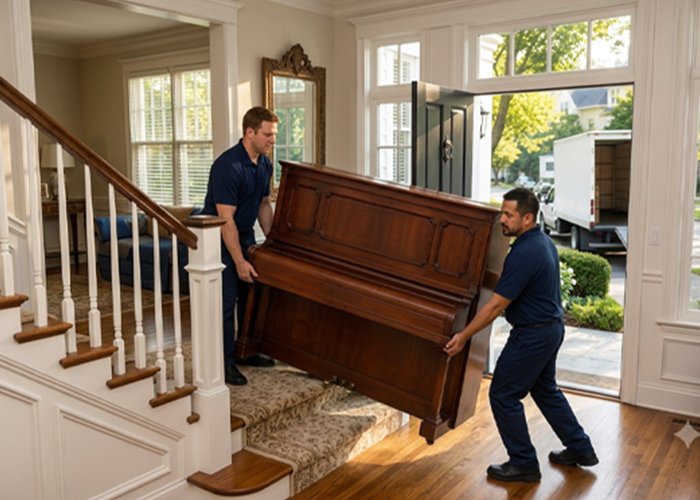
Shifting a giant instrument can easily drive anyone up the wall. Pianos are super heavy, super costly, and packed with delicate parts. Because of this, getting them ready for transport takes a bit of smart planning. We made this clear piano moving checklist to help you protect your prized instrument from start to finish.
| Piano Type | Average Weight Range | Common Moving Challenges |
| Upright Piano | 300 to 500 lbs | Top-heavy balance, tight hallways |
| Baby Grand Piano | 500 to 650 lbs | Broad footprint, removable legs |
| Concert Grand Piano | 800 to 1,200+ lbs | Extreme weight, complex teardown |
Getting things ready ahead of time keeps your home spotless and saves your bank account from huge repair bills.
Measure Everything First to Beat the Game
Before you start flexing your muscles, clear your walking paths completely. You need to map out the exact path from the living room straight to the truck. Grab a tape measure and check every single door, hallway, and set of stairs along the way. Take down wall art and move floor rugs so nobody trips over during the heavy lift.
Taking care of these simple chores early gives you the best piano moving tips for a smooth day. Make sure you prop all doors wide open before anyone picks up a single piece of gear.
Lock Up the Keys and Cover the Lid
Now that your path is clear as day, shift your focus right onto the instrument itself. Gently drop the key lid over the ivory keys. If your model comes with a built-in lock, turn the key to keep it shut tight. If you do not have a key, lay a clean blanket over the keys to stop them from jumping around.
Figuring out how to prepare a piano for moving starts with keeping those fragile keys safe from harm. Never stick tape directly onto the smooth wood finish because it will strip the shiny coat right off.
Wrap the Big Body with Extra Padding
Next up, you need to bundle up the main box like a winter coat. Wrap thick padded blankets all over every inch of the outer wooden shell. Pull those blankets snug around the sides, the top cover, and the foot pedals. Tie everything down using plastic wrap or standard packing tape to hold it solid.
Professional piano movers always double up padding on the sharp corners to dodge accidental wall hits. Good thick padding keeps nasty scratches, deep dents, and ugly wood chips far away during the trip.
Skip the Small Wheels to Save Your Floors
Lots of classic pianos sit on tiny metal wheels at the bottom. But here is the real kicker: those little wheels are mostly there for looks. If you try rolling a massive instrument on those small metal casters, you will slice deep ugly marks straight into your nice wood floors. Even worse, rusty old wheels often lock up and snap the wooden legs right off.
If you want a painless piano relocation, lift the entire unit onto a strong four-wheel flat cart with soft rubber tires. Always strap the instrument down tight to the cart with heavy straps before you roll it even an inch.
Keep the Weather from Ruining the Sound
Pianos are built out of fine real wood and tight steel strings. Real wood swells up and shrinks down whenever the air changes from dry to wet or hot to cold. Because of that, sudden weather changes can warp the big wooden soundboard inside. Never leave your sweet instrument sitting in a drafty garage or out on a damp driveway.
When you are moving a piano safely, set up your schedule so the instrument goes straight from one warm room to another. Doing this stops the tuning from going crazy and keeps the soft inner felts in tip-top shape.
Ready for a Stress-Free Move? Let Us Handle the Heavy Lifting!
Moving a heavy instrument takes special tools, strong hands, and plenty of patience. Why run the risk of personal injury or crazy high repair bills when you can just sit back and relax?
At All The Right Moves, our crew treats your prized instrument with total care from start to finish. Drop us a line today to get your free price quote and book your move!
Frequently Asked Questions
Can I move a piano by myself?
We strongly urge you not to try moving a heavy piano all by yourself. These instruments carry awkward weight and huge size. Trying a total DIY job usually leads to bad back injuries, ruined floors, or wrecked inner gear.
Should I tune my piano right after moving?
No, you should wait two or three weeks after the big move. Pianos need time to settle into the air and temperature of the new home. Tuning too early means the strings will just slide out of tune again super fast.
How do you transport a grand piano?
Moving a grand piano means taking off the foot pedals and side legs first. You carefully tilt the main box onto a heavy padded wooden board. Once you strap it down tight, it slides easily onto a heavy-duty rolling dolly.
What equipment is needed to move a piano?
You need thick moving pads, plastic wrap, strong lock straps, and a solid four-wheel flat cart. Special wooden boards, doorway ramps, and sticky work gloves also help you dodge tricky spots and handle steep stairs without dropping anything.
Will moving a piano ruin its soundboard?
Moving your instrument will not ruin the soundboard as long as you wrap it right and keep it warm. However, dropping the box hard or letting it sit in cold air can crack the wood and destroy the rich sound.